Service Animals
Hardin-Simmons University is committed to compliance with state and federal laws regarding individuals with disabilities. All questions regarding service animals should be directed to the Office of Disability Services in Sandefer Memorial. No documentation will be required to bring certified service animals into academic buildings on campus.
Guide to Animals on Campus
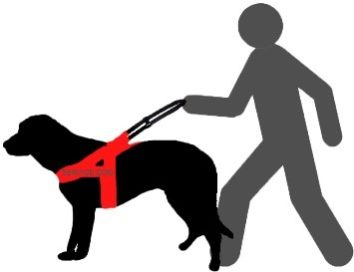 |
Service Animals
- Required because of a disability
- Trained to perform a task
- Allowed in academic buildings
- Not required to be registered
|
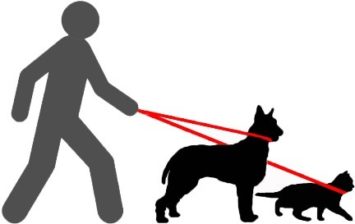 |
Assistance Animals
- Requested for emotional support
- Not trained to perform a task
- Not allowed in academic buildings (Residence halls only)
- Must be registered with Residence Life and the Office of Disability Services
|
Service Animals
A service animal is defined in Title II: Section 35.104 under the Americans with Disabilities Act (ADA) as a dog that is individually trained to do work or perform tasks for the benefit of an individual with a disability, including a physical, sensory, psychiatric, intellectual, or other mental disability. Service animals are allowed in public places because of the owner’s need for the animal at all times.
Examples of such work or tasks include but are not limited to:
- guiding people who are blind or have low vision with navigation;
- alerting people who are deaf to the presence of people or sounds;
- pulling a wheelchair;
- alerting an individual of a seizure, change in blood sugar, or an allergen;
- reminding a person with mental illness to take prescribed medications;
- calming a person with Post Traumatic Stress Disorder (PTSD) during an anxiety attack; or,
- performing other duties.
For more information, see ADA.gov.
Assistance Animals
The revised 2010 ADA regulations specify that “the provision of emotional support, well-being, comfort, or companionship do not constitute work or tasks,” so these animals are not considered service animals. However, an assistance animal is one that ameliorates identified symptoms of an individual’s emotional or psychological disability. The function of an assistance animal may be entirely passive with the sole role being its presence.
Assistance animals are also called:
- Emotional Support Animals (ESAs)
- Comfort Animals
- Companion Animals
- Therapy Animals – Their responsibilities are to provide psychological or physiological therapy to individuals, and they usually provide visitation to hospitals, nursing homes, and rehabilitation facilities.
The Fair Housing Act (Title VIII of the Civil Rights Act of 1968) and Housing and Urban Development’s Section 504 regulations (24 CFR Parts 8 and 9) govern the assistance animals.