The Return of the Cowboy Coders

In the computer science lab inside Hardin-Simmons University’s Holland School of Sciences and Mathematics, the atmosphere feels a bit like game day. Teams huddle over problem sheets, whiteboards fill with strategy sketches, and the pace is focused and collaborative.
“It’s like any team sport,” senior computer science major Danny South said. “We just compete on writing a correct program as fast as possible that solves the given problem.”
For South, an Abilene native graduating in December, Cowboy Coders offered exactly the challenge he was hoping to find. He knew competitive coding would prepare him for software job interviews where applicants are asked to write code on the spot.
“I wanted to develop proficiency with the data structures and algorithms that we use to solve them,” he said.
Across the room, sophomore Sofia Glaus shared her own reason for joining. The Waitsburg, Washington, native is double-majoring in computer science and piano, and she saw Cowboy Coders as a way to grow.
“I wanted to do something new and to learn and get better at coding, as well as get connected with other people in my field of study,” she said.
Their enthusiasm joined the momentum sparked by Todd Dole, department chair of computer science, who revived Cowboy Coders this fall.
“We used to do it back in the day,” Dole said. “It’s exciting to see the students jump in again.”
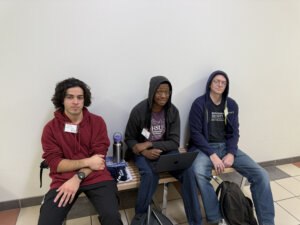
Left to right: Javiden Aghayev, Stephen Lajuwomi, Danny South
The Cowboy Coders’ name has long been part of HSU’s computer science history — an identity centered on teamwork, problem-solving, and friendly competition. This year, it returned with renewed purpose as seven students stepped forward to form two teams of three, plus an alternate, bringing fresh energy to the tradition while preparing for the International Collegiate Programming Contest, or ICPC. The global competition begins at the regional level and gives students real-world experience that strengthens their foundation for future careers.
Each ICPC contest follows a simple but demanding format: five hours, one computer, three students, and a series of complex programming problems. While one student codes, the other two plan ahead, analyze the next challenge, and strategize as a unit.
“This kind of competition allows them to problem-solve on their feet,” Dole said. “It’s a great thing to have on a résumé when applying for jobs. Most computer science interviews are more difficult than the job itself because they ask candidates to write code during the interview. These contests help them build that skill.”
Cowboy Coders also helps students qualify for the department scholarship, which recognizes those who participate in extracurricular activities such as programming contests.
As one of the more senior students, South appreciates the opportunity to support his teammates.
“I try to help other members where I can, but we are all pretty new to this,” he said.
He hopes the club will continue to flourish as an activity that complements coursework and prepares future students for their careers.
For Glaus, the experience has already made a difference.
“Cowboy Coders has really helped me realize the importance of some of the things I’ve been learning in class, and it’s inspired me to find faster, more efficient ways to solve problems,” she said. “As one of the younger members, I know I still have a lot to learn, but I also feel like I can trust the older students to help my team do well. As the club gains momentum and grows, I’m looking forward to getting better myself and becoming more competitive as a whole group.”
On Nov. 8, the teams traveled to the University of North Texas for the ICPC regional contest after completing an online practice round a few weeks earlier. Their performance exceeded expectations. The Cowboy Coders took first and second place in Division II at their site, and the top HSU team finished eighth out of about 20 teams in the entire South-Central region.
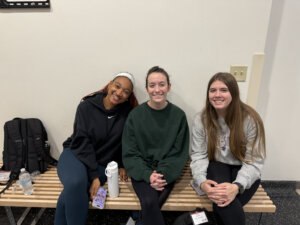
Left to right: Nicole Travers, Sofia Glaus, Kailey Pierce
The all-women team faced unexpected technical issues when the contest hosts struggled to get the software running. They spent the first half of the competition without a working computer — an extraordinary disadvantage in a timed event. But in true Cowboy spirit, they kept a positive attitude, persevered, and still finished ahead of several teams in the region.
For Dole, seeing the teams compete again marks the beginning of something meaningful.
“Bringing this back is a fun thing to do and gets them excited about what they’re doing in computer science,” he said.
As their monitors glow late into the evening and the rapid clicking of keyboards fills the lab, the Cowboy Coders are once again shaping the HSU experience — building skills, building community, and opening a new chapter in the university’s story one line of code at a time.
Latest News
Academic Support That Builds Strong Habits
February 6, 2026The transition to college can be overwhelming for students and parents alike. New academic expectations, heavier workloads, and increased independence require strong support systems. At Hardin-Simmons University, the Strategic Learning Initiative (SLI) equips students with the skills, structure, and academic strategies they need to succeed from the start.
Meet Your Student Government Association
January 23, 2026At Hardin-Simmons University, the Student Government Association (SGA) serves as the voice of the student body—advocating for student needs, strengthening campus community, and partnering with university leadership to enhance the student experience. Meet the students serving on this year’s Student Government Association.
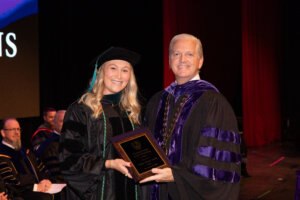
2025 December Commencement Awards
December 17, 2025Excellence in the classroom. Leadership in the clinic. Service beyond campus. Meet three Hardin-Simmons University graduates whose academic achievement, faith, and commitment to others earned them the university’s highest honors at winter commencement.