New Telehealth Training at HSU Set to Equip Students to Serve Rural Texas
With federal support and Christian values, the Clinical Mental Health Counseling program tackles West Texas’s mental health care gap.
In the vast stretches of rural West Texas, access to mental health care can feel out of reach. Dr. Randall Maurer and the Clinical Mental Health Counseling (CMHC) program at Hardin-Simmons University are using telehealth to change that.
“I wanted to establish telehealth services for our on-campus clinic and training in telehealth for our graduate students,” said Maurer, who is pursuing advanced certification through the Telehealth Certification Institute. “Obtaining more advanced training seemed wise.”
Through a partnership with Region 14 Education Service Center and support from the federal Rural Utilities Services (RUS) grant, HSU is preparing to deliver mental health services to rural schools starting fall 2025. The initiative includes providing schools with telehealth equipment and building secure connections between counseling interns and students in need.
“Rural communities are often poorly served,” Maurer said. “Driving to a city to find a licensed therapist takes time and resources many families don’t have. Telemental health brings care into their reach.”
These services are part of a broader effort to blend clinical expertise with Christian compassion. The CMHC program, accredited by CACREP, prepares students to serve diverse populations while growing professionally and spiritually.
“With our Christian perspective, we want students to learn all the ways we can reach the marginalized in our society,” Maurer said.
The program is also partnering with a local pain clinic to support individuals managing chronic pain—a population that often experiences both physical and psychological distress. HSU therapist interns will provide both in-person and telehealth services using a research-based protocol developed by the program.
“A holistic approach that includes both medical and psychological care is essential,” Maurer said. “When the brain is wired around pain, everything else—relationships, motivation, cognitive functioning—can suffer.”
At HSU’s on-campus Counseling Center, students already receive real-world experience using secure video technology for session recording and supervision. As the university finalizes its telehealth software and storage procedures, therapist interns will soon be delivering care under close faculty guidance.
“While telehealth and face-to-face counseling aren’t the same, the skills required are,” Maurer said. “The new rural outreach will allow students to work with public school students and their families—many of whom have never had access to mental health care.”
Training includes instruction in the ethics, procedures, and limitations of telehealth across multiple courses. Once services begin, students will deepen their learning through supervised practice.
“Many patients don’t realize how closely the mind and body are connected,” Maurer said. “Helping people understand that they have more control over their pain than they think is transformative.”
Ultimately, the initiative reflects HSU’s mission to serve others through faith-informed education and action.
“Our mission is to prepare students to provide high-quality, compassionate counseling to diverse populations in an environment enlightened by faith, which aligns closely with the goals of the RUS initiative,” said Maurer.
Local independent school districts interested in participating are encouraged to contact Rhonda Cox at Region 14.
Latest News
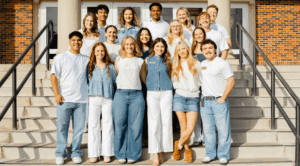
Meet Your Student Government Association
January 23, 2026At Hardin-Simmons University, the Student Government Association (SGA) serves as the voice of the student body—advocating for student needs, strengthening campus community, and partnering with university leadership to enhance the student experience. Meet the students serving on this year’s Student Government Association.
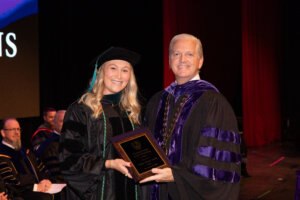
2025 December Commencement Awards
December 17, 2025Excellence in the classroom. Leadership in the clinic. Service beyond campus. Meet three Hardin-Simmons University graduates whose academic achievement, faith, and commitment to others earned them the university’s highest honors at winter commencement.

Students Honored on the Dean’s Academic Honor List – Fall 2025
December 17, 2025Hardin-Simmons University proudly announces the 133 students who have earned a place on the Dean’s List for the fall 2025 semester. These students have demonstrated exceptional academic achievement and a commitment to excellence.