Freshman HSU Student-Athlete Keegan Ratliff Competes Among the World’s Best at the U.S. Open
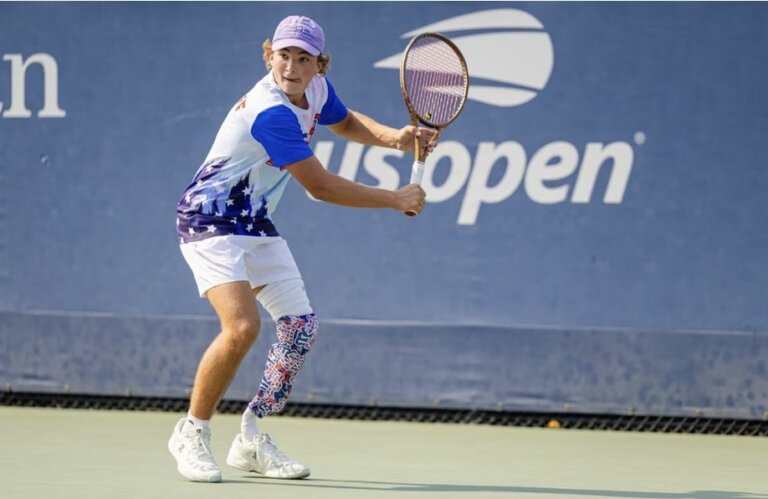
When most freshmen arrive on a college campus, they’re focused on adjusting to classes, meeting new friends and finding their place. For Hardin-Simmons University freshman Keegan Ratliff, the start of college also included a trip to New York City, where he recently competed against some of the world’s top para standing tennis players at the U.S. Open.
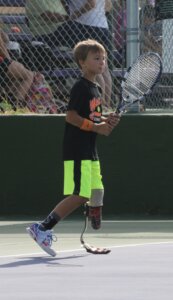
A business administration major from Mason, Texas, Ratliff has been playing tennis for as long as he can remember. Growing up around the sport, he was introduced to tennis through his mother, Wendy Ratliff, who spent more than two decades coaching high school tennis.
“My mom has been a coach since I was born,” Ratliff said. “Ever since I was able to walk and function, I was holding a racket and playing.”
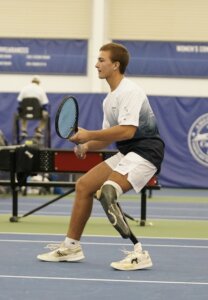 That early introduction grew into a competitive passion. Ratliff began playing in tournaments as a child and spent years competing against able-bodied players. Today, he has developed into one of the world’s top athletes in para standing tennis, an emerging adaptive sport for athletes with physical disabilities who compete while standing rather than using a wheelchair.
His journey into para standing tennis began during his freshman year of high school after his mother attended a coaching clinic and learned about opportunities within the sport.
“We got invited to a para standing tennis tournament in Dallas, and we just kind of fell in love with it,” Ratliff said. “The year after that, we got invited to the U.S. Open for an exhibition match, and ever since then, I’ve gone back every year.”
This fall marked Ratliff’s fourth appearance at the U.S. Open, where he joined competitors from across the globe in one of the sport’s premier showcases. Last year, he won the doubles title and finished as runner-up in singles in his division, helping elevate the visibility of para standing tennis on one of the sport’s biggest stages.
The event has experienced remarkable growth since Ratliff first stepped onto the U.S. Open stage. What began as a four-player exhibition has expanded into an international competition featuring athletes from around the world.
“This will be his fourth year going back to the U.S. Open,” Wendy Ratliff said. “It’s grown every year. He started with four players that first year, then eight, then 16, and now there are competitors from all over the world. They’re all out there for the same goal, trying to make para standing tennis a Paralympic sport.”
One of Ratliff’s most memorable tennis experiences came during the inaugural exhibition event when he had the opportunity to play on Arthur Ashe Stadium, the largest tennis stadium in the world and the centerpiece of the U.S. Open.
“It was really cool,” he said. “I could barely even play because I was so nervous. You look up, and it’s as high as you can see.”
Beyond the opportunity to compete on a national stage, Ratliff sees his role in para standing tennis as something bigger than himself.
“It means a lot to me,” he said. “It makes me feel like I have more of a purpose to serve and to showcase that anyone can do it. You don’t have to be able-bodied. Whatever condition you have, you can step on the court and show people they can do it too.”
His mother has watched that impact grow throughout the years.
 “I never babied him,” Wendy Ratliff said. “From the beginning, I wanted him to know he was capable of whatever he put his mind to. I didn’t want to hinder that.”
She remembers him accompanying her to practices while she coached in Wink, Texas, jumping onto the courts alongside high school players and embracing challenges that helped shape the resilience he displays today.
Today, that perseverance has helped Ratliff rise through the international rankings. According to Wendy, he recently captured singles and doubles titles at a para standing tennis event in Cincinnati and moved up to No. 2 in the world in his classification.
“It’s huge,” she said. “I don’t think he fully understands yet what he’s helping build and what he’s paving the way for.”
Para standing tennis advocates continue working toward the sport’s inclusion in the Paralympic Games. While that goal may still be years away, Wendy believes athletes like her son are helping create opportunities for future generations.
“Whether it happens for him or not, he’s helping pave the way for other people,” she said. “The more visibility the sport gets, the more people learn it exists.”
As he begins his first year at Hardin-Simmons, Ratliff is equally focused on his education and continued development as a player. His decision to become a Cowboy was influenced in part by his sister, Jonah Smith, a former HSU tennis player, as well as his familiarity with the university’s tennis program and culture.
“I knew Coach Williford really well,” Ratliff said. “I liked the atmosphere, the coaches’ philosophies and the school a lot. If I was going to play college tennis, this is where I wanted to go.”
Wendy is excited about the opportunities awaiting her son at Hardin-Simmons.
“I really feel like Coach Williford, Rick and DJ are very caring coaches,” she said. “I think they’re more about the kids’ lives. It’s not just about tennis.”
While Ratliff is eager to improve on the court, he is also focused on building a foundation for his future through his studies in business administration.
“My hope is to get my degree and be well off when I start a job,” he said. “I want to develop myself as best as possible, reach my potential in tennis and make a lot of good connections that I can use later down the road.”
For Ratliff, tennis has already provided lessons that extend far beyond competition.
“It’s taught me to have a good work ethic,” he said. “You’re never going to be perfect, and there’s always something to work on.”
As he settles into life at Hardin-Simmons after another appearance at the U.S. Open, Ratliff is balancing the demands of college life with competition at the highest levels of his sport. Whether pursuing a degree, representing HSU on the tennis court or helping advance the future of para standing tennis, he continues to demonstrate the perseverance and purpose that have defined his journey from small-town Texas to one of the sport’s biggest stages.
Latest News
HSU Students Develop Songwriting Skills Through Worship Workshop
October 1, 2026