HSU’s State-of-the-Art Nursing Facility Equips Students for Real-World Care
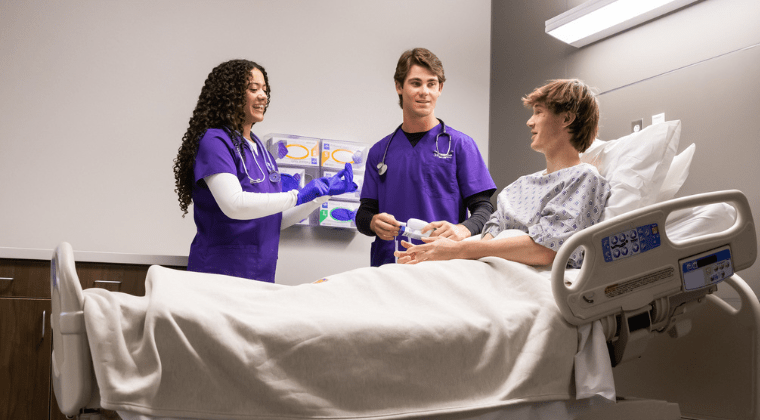
Nestled on the third floor of Abilene Hall, the Hardin-Simmons University on-campus School of Nursing stands as a testament to excellence in healthcare education. With newly renovated spaces that support state-of-the-art nursing education, the facility serves as a launching ground for the next generation of competent, courageous, and compassionate healers.
“The building’s standout feature is the integration of immersive clinical spaces that simulate real hospital environments, giving students hands-on experience from their first year,” said Katie Martin, instructor of nursing and simulation lab coordinator.
And she means immersive. From the moment you step onto the third floor, you’re transported to a hospital — white walls, handrails, and all. With a high-fidelity simulation center, fully equipped skill labs, and hospital-style patient rooms, the facility doesn’t just teach nursing — it replicates it.
“If we were ever faced with another pandemic, we’re set up to provide overall assistance,” said Martin. “Our simulation labs replicate a hospital unit with patient bays, call systems, crash carts, medication dispensing systems, and charting stations. Each room is equipped with lifelike mannequins capable of simulating vital signs, voice, and clinical symptoms.”
The scenarios are real, the stakes are high, and the learning runs deep, from managing postpartum hemorrhages and responding to pediatric emergencies to navigating the complexities of end-of-life care.
“Students practice a wide range of scenarios including basic vital sign checks, wound care, medication administration, maternal-newborn deliveries, pediatric emergencies, mental health crises, chronic disease management, and end-of-life care,” Martin said.
The nursing facility is rooted in HSU’s mission to blend education with Christian faith and servant leadership. Spaces are designed to foster reflection, collaboration, and compassionate care.
“Faculty model servant-leadership principles, and students participate in community-based simulations and service projects, reinforcing the integration of faith, learning, and service to others,” Martin said.
Students train on virtual reality modules, use telehealth platforms, and gain experience with electronic medical records — all in a setting that mirrors the fast-paced, tech-enabled world of modern nursing. These tools prepare students to document, assess, and make clinical decisions in a safe and controlled environment.
With 1,080 clinical hours built into the curriculum — one-third of them in simulation — HSU students graduate with a degree built on real-world experience, ready for both rural clinics and major hospitals.
“Given HSU’s commitment to rural health, the simulation labs and clinical partnerships expose students to both rural and urban healthcare challenges,” Martin said. “This blend ensures students are versatile, culturally competent, and ready to serve diverse populations.”
And that’s the heart of the facility: empowering the next generation of healers. From the first IV insertion to the final preceptorship, students are learning with the tools, technology, and support they need to become the next generation of Christ-centered caregivers.
Latest News
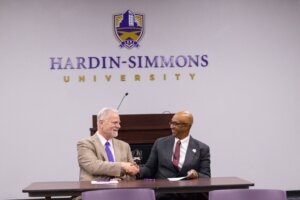
HSU and Ranger College Sign Agreement to Expand Transfer Opportunities
April 21, 2026Hardin-Simmons University and Ranger College signed a new articulation agreement, creating a seamless transfer pathway and expanding opportunities for students across the Big Country.
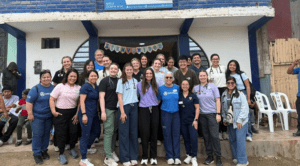
The Kind of Care That Goes Beyond the Classroom
April 15, 2026Through hands-on service in Peru, Hardin-Simmons University Physician Assistant Program students spent nearly two weeks in mobile medical clinics, treating 763 patients and impacting more than 900 lives. The mission trip is an integral part of their training, providing real-world clinical experience while advancing the program’s commitment to compassionate, service-driven healthcare.
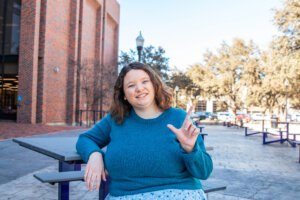
Finding Clarity: Emily Slaughter’s Journey at Hardin-Simmons University
April 10, 2026For Emily Slaughter, understanding herself changed everything. After discovering she is autistic, she began to make sense of her experiences and learn how to navigate life in a way that works for her. Through support and community, she continues to grow in confidence and find her place.